Introduction
Soup and stew are some of the best recipes for beginner cooks. They usually require simple ingredients, basic cooking techniques, and one pot, making them easy to prepare and clean up afterward.
If you’re new to cooking, learning how to make a few simple soups and stews can give you confidence in the kitchen. You can start with classic chicken noodle soup, tomato soup, vegetable soup, or potato soup before moving on to heartier dishes such as beef stew and chicken stew.
This guide features 20 easy soup and stew recipes for beginners, along with helpful cooking tips, ingredient ideas, and common mistakes to avoid.
1. Easy Chicken Noodle Soup
Chicken noodle soup is an excellent first recipe for beginners.
Ingredients
- Cooked chicken
- Chicken broth
- Carrots
- Celery
- Onion
- Garlic
- Egg noodles
- Black pepper
- Fresh parsley
Method
Cook chopped onion, carrots, celery, and garlic in a large pot until softened.
Add chicken broth and bring it to a gentle simmer.
Add noodles and cook until tender.
Stir in cooked shredded chicken.
Season with black pepper and parsley.
Serve warm.
2. Beginner Tomato Soup
Tomato soup requires only a few basic ingredients.
Cook onions and garlic.
Add canned tomatoes and vegetable broth.
Simmer for several minutes.
Blend the soup until smooth if desired.
Add basil and black pepper.
For a creamy version, add a small amount of cream or milk.
3. Simple Vegetable Soup
Vegetable soup is perfect for learning basic chopping and simmering techniques.
Add chopped carrots, potatoes, celery, tomatoes, peas, and onions to a pot.
Pour in vegetable broth.
Add garlic, herbs, and black pepper.
Simmer until the vegetables are tender.
Taste and adjust the seasoning before serving.
4. Easy Potato Soup
Potato soup is filling and beginner-friendly.
Cook chopped onion and garlic.
Add diced potatoes and broth.
Simmer until the potatoes are tender.
Blend part of the soup for a creamy texture.
Add milk if desired.
Season with black pepper and herbs.
5. Beginner Lentil Soup
Lentils are easy to cook and make a hearty soup.
Combine lentils, carrots, celery, onions, tomatoes, garlic, and broth.
Add cumin and black pepper.
Simmer until the lentils are tender.
Add lemon juice and fresh herbs before serving.
6. Simple Chicken and Rice Soup
This soup is an easy family meal.
Cook onion, carrots, and celery.
Add chicken broth and cooked chicken.
Add cooked rice.
Simmer until everything is hot.
Season with herbs and black pepper.
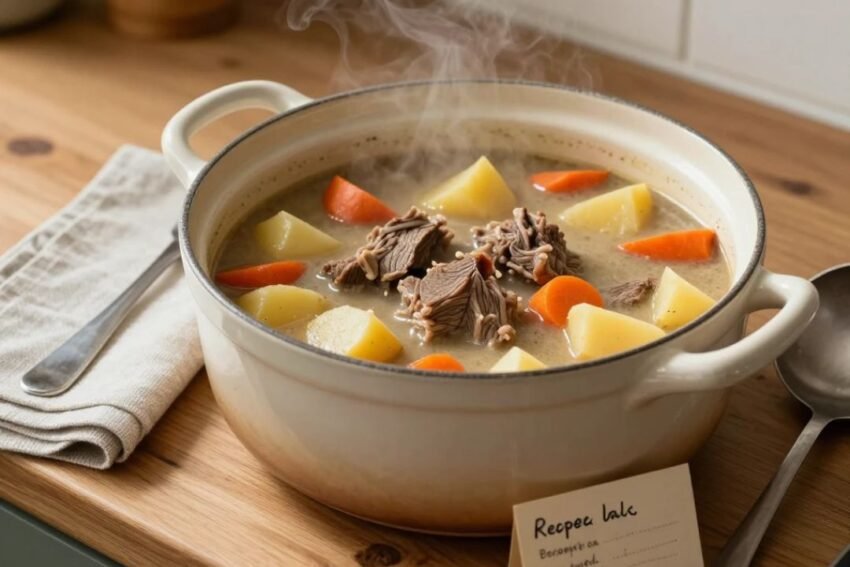
7. Easy Beef Stew
Beef stew is a great recipe to learn after mastering simple soups.
Ingredients
- Beef chunks
- Potatoes
- Carrots
- Onion
- Garlic
- Beef broth
- Tomato paste
- Thyme
- Black pepper
Method
Brown the beef in a suitable pot.
Add onions and garlic.
Stir in tomato paste.
Add beef broth, potatoes, and carrots.
Season with thyme and pepper.
Simmer until the beef becomes tender and the vegetables are thoroughly cooked.
8. Beginner Chicken Stew
Chicken stew is easier than many beginners expect.
Brown chicken pieces.
Add onions, garlic, carrots, and potatoes.
Pour in chicken broth.
Add thyme and black pepper.
Simmer until the chicken is thoroughly cooked and the vegetables are tender.
9. Easy Bean Soup
Bean soup is filling and simple.
Combine canned beans, tomatoes, carrots, celery, onions, and broth.
Add garlic, oregano, and black pepper.
Simmer until the vegetables are tender.
Serve with bread if desired.
10. Simple Chicken Tortilla Soup
Cook onions and garlic.
Add cooked chicken, tomatoes, beans, corn, and broth.
Season with cumin and chili powder.
Simmer until hot.
Serve with avocado, cilantro, cheese, or tortilla strips.
11. Easy Mushroom Soup
Mushroom soup is a simple way to practice sautéing.
Cook sliced mushrooms with onions and garlic.
Add broth.
Simmer until the mushrooms are tender.
Blend some of the soup if desired.
Add milk or cream.
Season with thyme and black pepper.
12. Beginner Vegetable Stew
Vegetable stew is flexible because you can use many different vegetables.
Combine potatoes, carrots, peas, mushrooms, tomatoes, onions, and bell peppers.
Add vegetable broth.
Season with herbs and pepper.
Simmer until the vegetables are tender.
13. Simple Chicken and Vegetable Stew
Cook chicken pieces with onions and garlic.
Add carrots, potatoes, peas, and broth.
Season with thyme and rosemary.
Simmer until the chicken and vegetables are thoroughly cooked.
Serve with bread or rice.
14. Easy Black Bean Soup
Black bean soup is flavorful and affordable.
Cook onions and garlic.
Add black beans, tomatoes, corn, and broth.
Season with cumin, paprika, and chili powder.
Simmer for several minutes.
Top with avocado or fresh herbs.
15. Simple Carrot Ginger Soup
Carrot ginger soup is colorful and easy to prepare.
Cook onion and garlic.
Add chopped carrots, ginger, and broth.
Simmer until the carrots are tender.
Blend until smooth.
Add a little lemon juice before serving.
16. Easy Split Pea Soup
Split pea soup requires simple ingredients.
Combine split peas with carrots, celery, onions, garlic, and broth.
Add thyme and black pepper.
Simmer until the peas are soft.
Serve warm.
17. Beginner Turkey Soup
Turkey soup is a useful recipe for leftover cooked turkey.
Combine turkey with carrots, celery, onions, garlic, and broth.
Add rice, noodles, or potatoes.
Simmer until the vegetables are tender.
Season with herbs and pepper.
18. Easy Chickpea Stew
Chickpea stew is simple and filling.
Cook onions and garlic.
Add canned chickpeas, tomatoes, spinach, and broth.
Season with cumin and paprika.
Simmer until the spinach is tender.
Serve with rice or bread.
19. Simple Beef and Vegetable Soup
Brown ground beef or small pieces of beef.
Add onions, carrots, celery, potatoes, and tomatoes.
Pour in beef broth.
Simmer until the beef is thoroughly cooked and the vegetables are tender.
Season with herbs and black pepper.
20. Easy Chicken Stew with Dumplings
This is a good recipe to try once you’re comfortable with basic stews.
Prepare a chicken stew using chicken, carrots, celery, onions, garlic, and broth.
Prepare simple dumplings using flour, baking powder, and milk.
Add the dumplings to the simmering stew.
Cook until the chicken and dumplings are thoroughly cooked.
Serve warm.
Basic Ingredients Every Beginner Should Have
You don’t need a large pantry to make delicious soup and stew.
Vegetables
- Onions
- Garlic
- Carrots
- Celery
- Potatoes
- Tomatoes
- Peas
- Spinach
Proteins
- Chicken
- Beef
- Turkey
- Beans
- Lentils
- Chickpeas
Pantry Staples
- Chicken broth
- Beef broth
- Vegetable broth
- Canned tomatoes
- Rice
- Pasta
- Tomato paste
- Flour
Seasonings
- Black pepper
- Paprika
- Thyme
- Rosemary
- Oregano
- Basil
- Cumin
- Parsley
Essential Cooking Tools
Beginners don’t need expensive kitchen equipment.
Large Pot
A large pot is useful for almost every soup and stew recipe.
Sharp Knife
A sharp knife makes chopping vegetables easier and safer when used properly.
Cutting Board
Use a stable cutting board for preparing vegetables and meat.
Wooden Spoon
A sturdy spoon is useful for stirring soups and stews.
Measuring Cups
Accurate measurements can help beginners follow recipes more consistently.
Immersion Blender
An immersion blender is helpful for creamy vegetable soups, although it is optional.
Basic Soup-Making Technique
Most simple soups follow a similar process.
Step 1: Prepare the ingredients.
Wash and chop vegetables.
Step 2: Cook the aromatics.
Sauté onions and garlic.
Step 3: Add the main ingredients.
Add vegetables, protein, beans, or other ingredients.
Step 4: Add broth.
Pour in the appropriate broth.
Step 5: Simmer.
Cook until the ingredients are thoroughly cooked and tender.
Step 6: Season.
Taste and adjust herbs, spices, salt, and pepper.
Step 7: Serve.
Serve hot with a suitable side if desired.
Basic Stew-Making Technique
Stews usually involve a few additional steps.
Start by browning the meat when appropriate.
Add onions and garlic.
Add broth or another cooking liquid.
Add vegetables.
Season with herbs and spices.
Simmer until the meat is thoroughly cooked and tender and the vegetables are soft.
Common Mistakes Beginners Should Avoid
Adding Too Much Salt
Broth and canned ingredients can already contain sodium.
Taste before adding additional salt.
Cutting Vegetables Unevenly
Large pieces take longer to cook than small pieces.
Try to cut vegetables into similar-sized pieces.
Cooking Meat Insufficiently
Chicken, beef, turkey, and other meats should be cooked thoroughly and safely.
Boiling Too Aggressively
A gentle simmer is often better for soups and stews.
Adding Everything at Once
Some ingredients cook faster than others.
Add ingredients according to their cooking time.
Overcooking Vegetables
Vegetables can become mushy if cooked for too long.
How to Make Soup More Flavorful
If your soup tastes bland, don’t immediately add large amounts of salt.
Try:
- Garlic
- Fresh herbs
- Lemon juice
- Black pepper
- Paprika
- Cumin
- Ginger
- Tomato paste
A small amount of acidity from lemon or lime can also brighten flavors.
How to Make Stew Thicker
If your stew is too thin, you have several options.
Cornstarch Slurry
Mix cornstarch with cold water and add it gradually.
Flour
A suitable flour mixture can help thicken the cooking liquid.
Mashed Potatoes
Mashed potatoes can naturally thicken some stews.
Simmering
Allowing a stew to simmer uncovered can reduce excess liquid.
Beginner-Friendly Soup and Stew Meal Prep
Soup and stew are convenient for preparing several meals at once.
Choose recipes such as:
- Chicken noodle soup
- Lentil soup
- Vegetable soup
- Beef stew
- Chicken stew
- Bean soup
Prepare a larger batch.
Divide it into suitable containers.
Refrigerate or freeze portions according to food-safety recommendations.
Reheat thoroughly before serving.
Healthy Cooking Tips for Beginners
You can make soup and stew more balanced by:
- Adding more vegetables.
- Including beans or lentils.
- Choosing suitable lean proteins.
- Using herbs and spices.
- Watching the amount of added salt.
- Choosing lower-sodium broth when appropriate.
- Serving with vegetables or whole grains.
Frequently Asked Questions
What is the easiest soup for a beginner?
Tomato soup, vegetable soup, chicken noodle soup, and potato soup are excellent choices.
What is the easiest stew to make?
Chicken stew and vegetable stew are generally good starting points because they use simple ingredients and straightforward cooking techniques.
How do I know when soup is ready?
Vegetables should be tender, and meat should be thoroughly cooked according to appropriate food-safety standards.
Why does my stew taste bland?
It may need more herbs, spices, aromatics, or acidity. Taste the stew before adjusting the seasoning.
Can beginners make creamy soup without cream?
Yes. Blended potatoes, beans, vegetables, or plain yogurt can provide creaminess depending on the recipe.
Conclusion
Learning to make soup and stew recipes for beginners is an excellent way to build confidence in the kitchen. These meals are flexible, forgiving, and easy to customize with ingredients you already have.
Start with simple dishes such as chicken noodle soup, tomato soup, vegetable soup, or potato soup. Once you understand basic simmering and seasoning techniques, move on to beef stew, chicken stew, lentil soup, and hearty bean dishes.
Remember to prepare ingredients carefully, cook meat thoroughly, add seasonings gradually, and avoid rushing the simmering process.
With practice, you’ll be able to create warm, flavorful, homemade soups and stews that are perfect for everyday family meals.